Building Worlds In An Ocean Of Singles
The single has taken prominence. Not because it's better, but because it's easier. Easier to release, easier to playlist, easier to skip. The music industry figured out that attention is the currency, and a three-minute hook is cheaper to manufacture than a world. So that's what gets made. Hooks. Drops. Moments. Things designed to land fast and leave faster.
I've never been interested in that.
I make albums. Deliberately, stubbornly, sometimes at real personal cost. And I've been thinking about why, because it's not sentimentality. It's not that I think albums are sacred because of some golden era I'm trying to resurrect. It's simpler than that. I grew up on things that had depth. Video games with plots that pulled you through twenty hours and still left you thinking. Sci-fi novels with worlds that felt lived in, with histories and rules and consequences. Films where the mythology ran deeper than what was on screen. That's what I wanted from music. Not a track. A place to go.
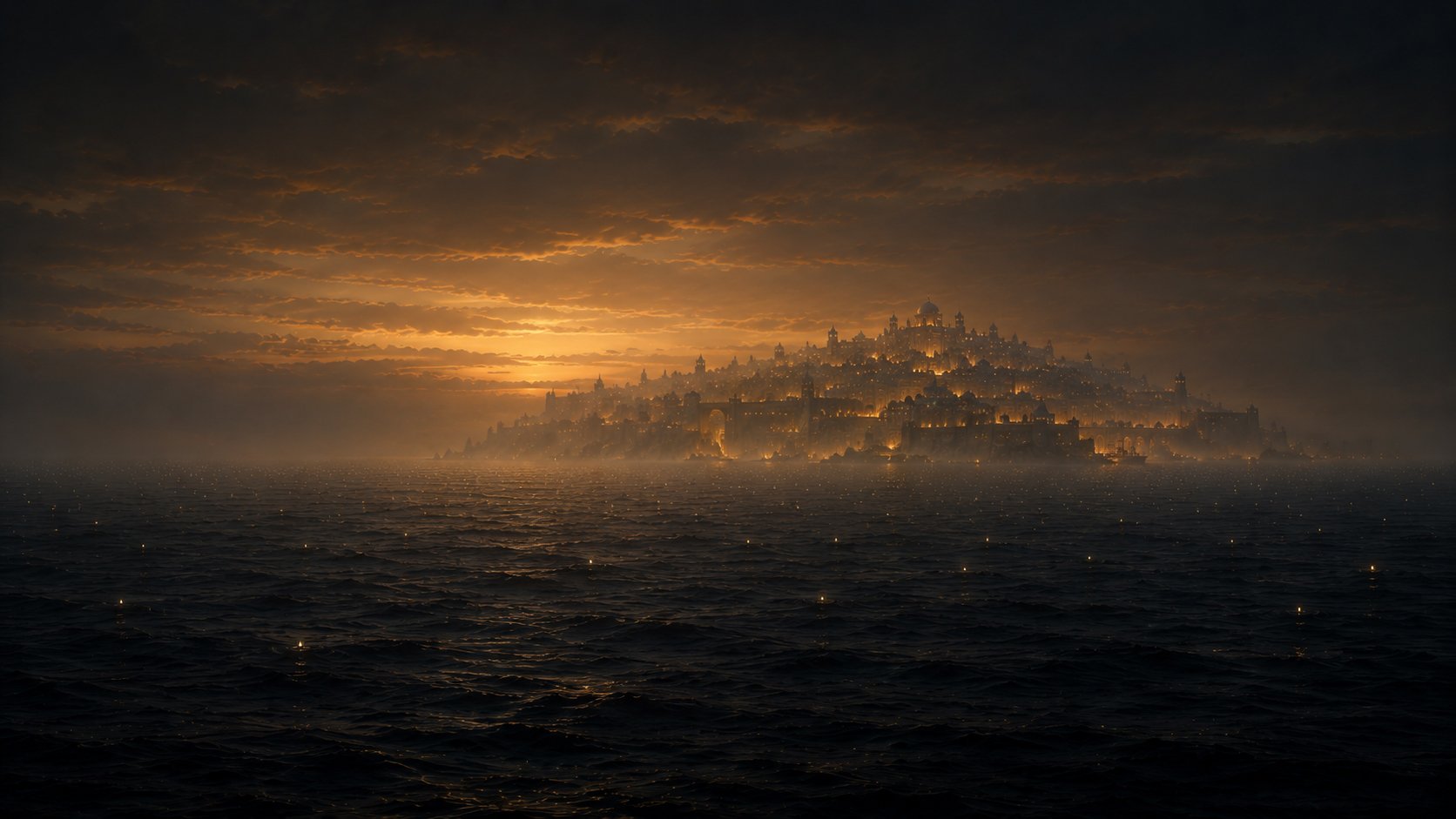
You can't build a place in one song. A single is a room. An album is a building. A concept album with characters and a world underneath it is something closer to a city. You can wander around in it. You can find things on the fifth listen you missed on the first. That's not an accident. That's the whole point.
Bowie understood this before almost anyone. Ziggy Stardust wasn't a costume or a gimmick. It was a fully constructed world, a character with a mythology, a rise, and a deliberate ending. Bowie killed Ziggy on stage, mid-tour, because the character was threatening to consume the artist. Then he moved on and built another world. Aladdin Sane. The Thin White Duke. Each one a different lens on a different moment, each one saying something real about fame and seduction and power. Theatre was the delivery mechanism.
George Clinton built the Mothership. Parliament-Funkadelic created an entire cosmology around funk as liberation, with characters and narratives and a philosophy you had to follow across albums to fully understand. Gorillaz started because Damon Albarn and Jamie Hewlett watched MTV one evening and were genuinely appalled by the emptiness of what they saw. The response was a fictional band with four characters, their own backstories, their own universe, and albums that used that universe to satirize and say something about the world falling apart around them. Janelle Monae built the Metropolis Saga following a fugitive android named Cindi Mayweather, using science fiction to talk about identity and rebellion and what happens when a society decides certain people don't fit. Right now, Angine de Poitrine are pulling real audience attention by claiming to be aliens, talking in an invented language, wearing masks, building a world so strange and specific that people can't help but lean in. The depth is the point. And people find it because they were already hungry for it.
I've been doing the same thing, in my own way, for a while now.
Nil Prophet is a voice from outside the broadcast. He operates from the margins, from the place beyond the algorithm, beyond the approved narrative, beyond the comfortable numbness that's been carefully constructed around you. He's not interested in saving anyone. He doesn't do salvation or convenient hope with a subscribe button attached. What he does is transmit. Because somewhere in the noise there are people who feel the strain beneath the smile, the silence behind the scrolling, the weight of a life that doesn't quite belong to them. The signal needs to exist. That's enough.
Evoran Codex has been here since before the first cell divided. An immortal archivist of unknown origin who has watched the entire arc of human civilization, every rise, every fall, every moment where a species stood at a crossroads and chose the path that served the few over the many. He doesn't judge. Judgment requires surprise, and Evoran hasn't been surprised in a very long time. He simply documents. Consciousness was evolution's most ambitious experiment, and the archive of what humanity has done with it is vast, detailed, and not entirely flattering.
Zsófia has lived at the edge of the forest long enough to remember when the world was quieter. A Hungarian witch, keeper of old things, speaker to entities that stopped being worshipped long before any of us were born but who listen still, because the old ones always listen. She casts her spells not for power but for protection. Something must stand between what remains and what is coming. The gods she calls upon are older than our institutions, older than our currencies, older than the systems we mistake for civilizations. She is quietly furious at what the modern world has discarded, and she has not stopped calling the guardians forth.
Three characters. Three different perspectives from the same burning building. None of them share a universe in any tidy sense, but they share a frequency. And the albums they inhabit aren't collections of songs so much as transmissions from those vantage points.
Attention spans are shrinking. The platforms are designed to shrink them. But the same culture produces people who will watch a six hour documentary in a weekend, spend two hundred hours in an open world game, read a thousand page novel in a fortnight. Attention hasn't gone anywhere. It just goes to things people believe are worth it.
That's the only question that matters. Is it worth it.
I think it is. That's why I keep building.